








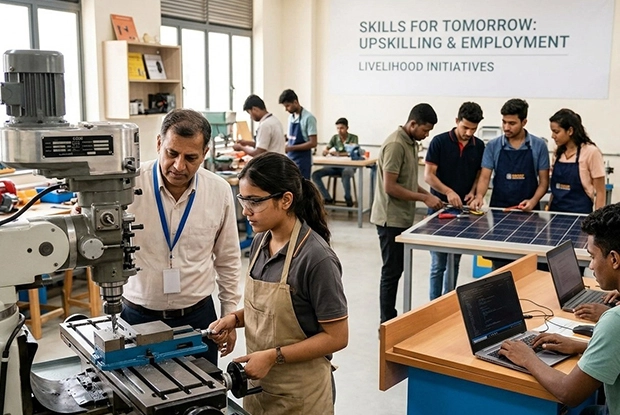
Upskilling and Livelihood Generation: Unlocking Employment Opportunities for Today’s Youth
Introduction
Across the world, there is an influx of millions of youth in workforce - yet unemployment and underemployment remain the constant cycle. The gap between the skill garnered by youth and the skills employers demand is widening, driven by rapid technological change, automation, and emerging industry needs.
The possible solution to this challenge lies in a powerful two-part strategy: upskilling and livelihood generation. When the youth are equipped with the right skills and connected to real economic opportunities, communities thrive, poverty declines, and sustainable growth becomes possible just like a domino effect.
Understanding the Youth Employment Crisis
According to global labour reports, youth unemployment is consistently two to three times higher than adult unemployment. Many who do find suitable work are trapped in the clutches of low-wage, informal jobs providing little security or growth potential.
The root causes are complex and demands attention- outdated education systems that don’t align with market needs, limited access to professional networks, geographic barriers, and a lack of mentorship or career guidance.
What Is Upskilling and Why Does It Matter?
Upskilling is a process of learning new or enhanced competencies to remain relevant and competitive in the job market. Considering traditional education which tend to prioritise rote learning, upskilling programs on the other hand are typically shorter, focused, and directly aligned with industry needs.
For youth, upskilling can be learning digital tools, mastering a trade, developing entrepreneurial skills or gaining industry certifications that open doors to better-paying jobs. It pledges a direct link to building confidence and self-reliance - qualities that are just as vital as technical knowledge in professional settings.
Key Sectors Driving Youth Livelihood Generation
1. Digital Skills and Technology
Employment by the digital economy is arguably the quickest growing in the world in terms of hiring talented youth. Coding bootcamps, digital marketing courses, data analytics training, and cybersecurity certification all help young individuals build marketable skills within weeks or months.
Free and affordable online courses for technology education have helped make the learning process available to disadvantaged rural youth who can compete in international labor markets via freelancing.
2. Vocational Training and Technical Education
Trades such as electrician, plumber, welder, mechanic, and construction worker require highly skilled professionals who often face a shortage of workers. Vocational courses offer a clear path to well-paid and secure employment that does not necessitate having a four-year degree.
Technical and vocational education is an emerging focus for many countries with an increased emphasis on combining traditional classroom instruction with apprenticeship.
3. Agricultural and Rural Youth Development
Despite the advent of technological advancement, agricultural activities are still essential in providing economic support to households, particularly in developing nations. Agrarian entrepreneurship programs for youth educate participants about new farming practices, post-harvest handling, logistics, and agritech applications.
4. Entrepreneurship and Micro-Enterprise Development
But not all youth require a job – for others, creating the job is the solution. Through entrepreneurship training schemes, which incorporate business management skills, micro-financing options, and mentoring services, thousands of young entrepreneurs have emerged across Africa.
The Role of Government and Private Sector
Sustainable youth employment requires planning, strategizing and collaboration between governments, businesses, NGOs and educational institutions. Governments must design inclusive skill development policies and fund accessible training centers. Corporations can contribute through apprenticeship programs, internships, and corporate social responsibility (CSR) initiatives that prioritize youth hiring and mentorship as their key mandate.
Public-private partnerships in skills development have proven particularly effective in rapidly addressing the talent gap while ensuring training programs remain market-relevant.
How Youth Can Take the First Step
The journey to employment begins with cumulative action. The youth are encouraged to start by:
- Identifying high-demand skills in their local or target job market
- Enrolling in free online courses on platforms like Coursera, Khan Academy, or government portals
- Seeking mentorship through community organizations or professional networks
- Applying for government-sponsored skill development schemes and scholarships
- Building a portfolio or practical experience through volunteer work and internships be it through government internship programs or platforms like LinkedIn, Internshala and others.
The future belongs to the prepared, the skilled and the one who chooses being dynamic. Upskilling and livelihood generation programs are not just economic tools , they are instruments of dignity, equity, and opportunity. When you are empowered with relevant skills and pathways to employment, they become drivers of innovation, stability, and prosperity for entire communities.