








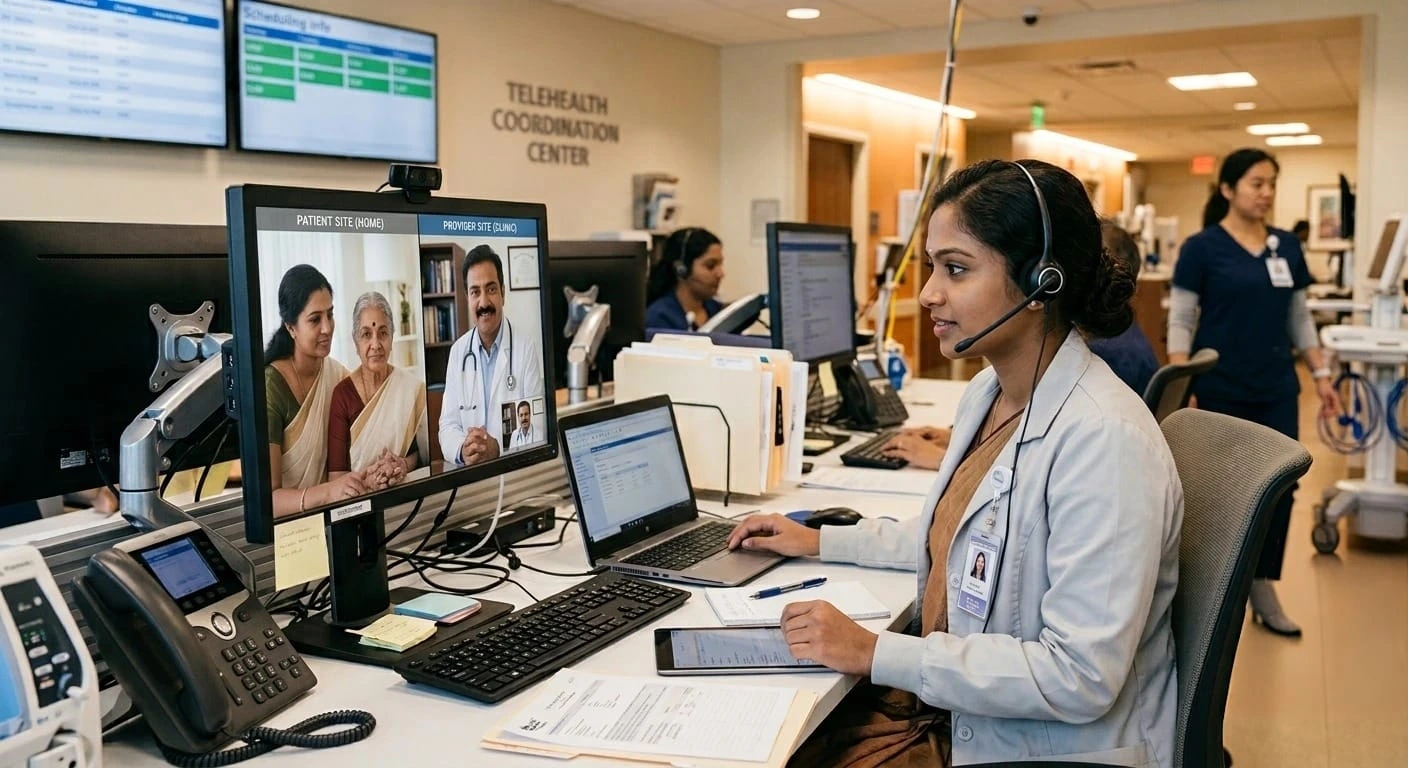
How Telehealth Coordinators Support Doctors and Patients
The Rise of Telehealth in Modern Healthcare
Healthcare delivery has changed dramatically in recent years, with telemedicine now an essential component of patient care. Virtual consultations, remote monitoring, and digital health platforms have revolutionized how medical services are delivered to patients, resulting in an increased demand for trained individuals who can bridge the gap between technology and healthcare.
Telehealth coordinators have emerged as critical participants in the new healthcare environment, assisting both doctors and patients via digital channels while ensuring that excellent care is accessible and efficient.
What Is a Telehealth Coordinator Role?
A telehealth coordinator supervises the technical and administrative aspects of virtual healthcare services. They coordinate appointment scheduling, technology setup, patient communication, paperwork, and follow-up with healthcare providers and patients.
Their work ensures that telemedicine appointments operate efficiently, allowing doctors to focus on diagnosis and treatment while patients have easy access to medical services from home.
How Telehealth Coordinators Support Doctors
Streamlining Virtual Consultations
Telehealth coordinators prepare for appointments by obtaining patient information, checking insurance data, and ensuring all essential documentation are available prior to consultations. This preparation enables physicians to conduct virtual visits efficiently and without administrative delays.
Managing Technology and Platforms
From testing telemedicine platforms to troubleshooting connectivity concerns, coordinators ensure that technology operates properly during patient appointments. They handle equipment setup, platform navigation, and troubleshoot technical issues that could disrupt care.
Maintaining Medical Documentation
Proper documentation is critical in telemedicine. Coordinators ensure that consultation notes, medications, and follow-up instructions are correctly documented in electronic health records, resulting in complete patient histories.
Coordinating Follow-Up Care
Following virtual consultations, coordinators schedule follow-up appointments, specialist referrals, and medication delivery, guaranteeing continuity of treatment without forcing patients to attend in person.
How Telehealth Coordinators Support Patients
Guiding Technology Setup
Many patients, particularly the elderly, are unfamiliar with telehealth platforms. Coordinators provide step-by-step instructions for downloading apps, joining video conversations, and using required equipment, making virtual care accessible to everybody.
Offering Scheduling Flexibility
Telehealth coordinators provide patients convenient appointment times, including after-hours choices, which reduces wait times and accommodates hectic schedules.
Explaining What to Expect
Before consultations, coordinators tell patients about the virtual visit procedure, assisting them in preparing questions and gathering pertinent medical information.
Providing Technical Support
If patients have connectivity or platform challenges, coordinators provide prompt troubleshooting assistance to avoid missed appointments and ensure uninterrupted care.
Career Opportunities and Growth
The demand for telehealth specialists is increasing as telemedicine becomes a permanent part of healthcare delivery. Hospitals, clinics, private practices, and telemedicine firms are actively looking for qualified coordinators with healthcare administration experience.
Telehealth services coordinator salaries vary depending on experience and region, with entry-level employment offering competitive pay and great growth potential as the industry grows.
Professionals can pursue exciting job opportunities in the burgeoning healthcare sector by becoming a Telehealth Coordinator, Virtual Care Manager, Telemedicine Support Specialist, or Digital Health Navigator.
Why Choose Peerless Skills Academy?
Our Telehealth Service course provides comprehensive training in delivering healthcare support through digital and communication technologies. The program covers:
1. Virtual patient consultation support
2. Telemedicine platform operations
3. Remote patient monitoring
4. Digital healthcare communication
5. Appointment coordination
6. Healthcare data privacy compliance
We also offer specialized training through our telehealth certification course, telehealth training, and virtual healthcare training programs—preparing students for successful careers in the telehealth industry.
Conclusion
Telehealth coordinators serve as the backbone of modern virtual healthcare, ensuring doctors deliver quality care while patients receive convenient, accessible services. As telemedicine continues to expand, skilled professionals with proper telehealth course training will be in high demand.
If you're looking for a rewarding career in the growing field of telehealth, consider enrolling in our telehealth services coordinator course and take the first step toward success.